Dry Eye Clinic

Dry Eye Treatment in Tampa, Sebring, Brooksville & Gainesville

You deserve NEWSOM EYES!

Burning, grittiness, watering and vision that blurs and clears through the day are not something to live with. The Dry Eye Clinic at Newsom Eye treats the cause, not just the symptom.

Patient with irritated, red eyes from dry eye syndrome
25+ Years
Serving Florida patients
100,000+
Surgeries performed
5 Locations
Sebring to Gainesville
Dry Eye Clinic
Advanced in-office therapies
Illustration of the three layers of the tear film in dry eye syndrome
The Basics

What is dry eye syndrome?

Dry eye syndrome is a disease that affects both the comfort of your eyes and the quality of your vision. A healthy eye is protected by a tear film made of three layers: an oily layer from the meibomian glands that slows evaporation, a watery layer from the lacrimal gland that washes away foreign particles, and a mucous layer from the conjunctiva that keeps tears on the cornea.

Dry eye occurs when the quantity or the quality of that tear film drops. Tear osmolarity rises, the surface becomes inflamed, and the cornea — which depends entirely on tears for its oxygen and nutrients — begins to suffer.

That is why dry eye blurs vision rather than simply feeling uncomfortable, and why watery eyes are so often a dry-eye symptom rather than the opposite.

  • Oily layer. From the meibomian glands — slows evaporation.
  • Watery layer. From the lacrimal gland — washes away particles.
  • Mucous layer. From the conjunctiva — keeps tears on the cornea.

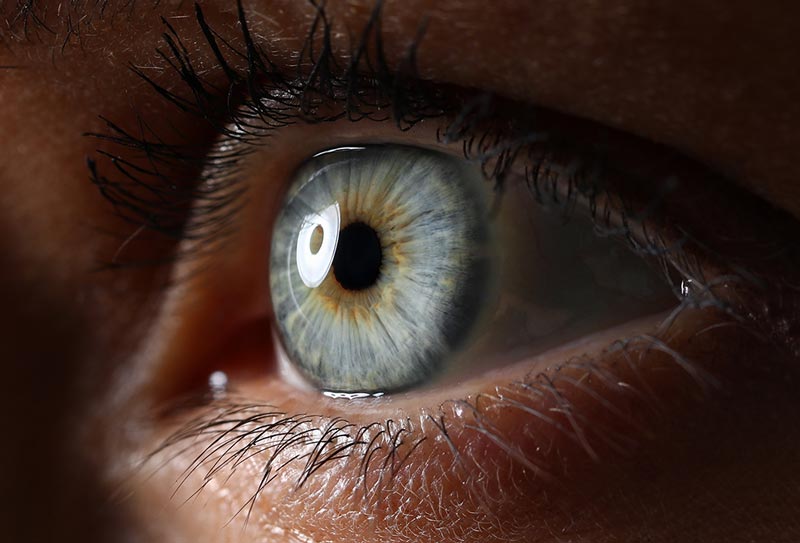
Close-up of a dry, irritated eye surface
Symptoms & Risk Factors

How to know if dry eye is what you have

Dry eye rarely announces itself as dryness. Most patients describe grittiness, burning, light sensitivity, a feeling that something is in the eye, or vision that blurs and then clears when they blink.

Risk climbs after age 40 and is higher with eyelid problems, recent eye surgery, autoimmune disease and certain medications. External factors matter too — extended screen time and contact lens wear are two of the most common aggravators we see.

Because dry eye is chronic and progressive, an evaluation is worth doing before it starts affecting your daily comfort or your surgical results.

  • Symptoms: dryness or grittiness, burning or stinging, light sensitivity, foreign-body sensation, excessive tearing, blurred or fluctuating vision.
  • Risk factors: aging (40+), eyelid problems, recent eye surgery, autoimmune disease, certain medications.
  • External factors: extended computer use and contact lens wear.
Dry Eye Clinic

Treatments offered at the Newsom Eye Dry Eye Clinic

Dry eye has several distinct causes, so it has several distinct treatments. Your evaluation determines which one fits.

1

MiBo ThermoFlo

Treats obstructed meibomian glands — the cause of evaporative dry eye, the most common form. Consistent emissive heat restores healthier lipid secretions and a more stable tear film.

2

Autologous serum eye drops

Made from your own blood, these drops carry nutrients and growth factors essential for corneal health. A strong option for patients who have not improved on conventional drops.

3

PROKERA® biologic corneal bandage

The only FDA-cleared therapeutic device that both reduces inflammation and promotes healing. Used for keratitis, recurrent corneal erosion, dry eye syndrome and chemical burns.

4

Prescription eye drops

Restasis® helps increase your eyes’ natural ability to produce tears. Xiidra®, used twice daily, treats the signs and symptoms of dry eye disease caused by inflammation.

5

Omega-3 nutritional therapy

Research and clinical experience support specific potent, pure omega-3 formulations that deliver a therapeutic dose of EPA and DHA to improve eye health and relieve symptoms.

6

Scleral / PROSE lens fitting

For contact lens wearers with dry eye, a scleral lens vaults over the cornea, holding a reservoir of fluid against the eye while correcting your prescription.

3 LayersIn a healthy tear film
Age 40+When risk begins to climb
#1Most common corneal disease
ChronicManageable, though not curable
Dry Eye FAQs

Frequently asked questions about dry eye

What is dry eye syndrome?

Dry eye syndrome is a chronic disease in which the eye does not make enough tears, or the tears it makes are of poor quality. The result is an unstable tear film, increased tear osmolarity and inflammation of the eye’s surface — which is why dry eye affects vision, not just comfort.

What are the symptoms of dry eye?

Dryness or grittiness, a foreign-body sensation, burning or stinging, sensitivity to light, blurred or fluctuating vision, and — counterintuitively — excessive tearing. Reflex watering is one of the most common signs of a dry eye.

Why do my eyes water if they are dry?

When the tear film breaks down, the eye’s surface becomes irritated and triggers a flood of reflex tears. Those tears are mostly water and lack the oily and mucous layers needed to stay on the eye, so they run over the lid instead of protecting the cornea.

What causes dry eye?

A healthy tear film has three layers: an oily layer from the meibomian glands that slows evaporation, a watery layer from the lacrimal gland that washes away particles, and a mucous layer from the conjunctiva that keeps tears on the cornea. Dry eye occurs when any of those layers falls short in quantity or quality.

Who is most at risk for dry eye?

Risk rises with age, particularly after 40. Other risk factors include eyelid problems, recent eye surgery, autoimmune disease, certain medications, and external factors such as extended computer use and contact lens wear.

How is dry eye diagnosed?

Your doctor can diagnose dry eye during your eye examination. Common tests use dye solutions that highlight dry spots on the corneal surface, and paper strips or threads placed on the eyelid to measure how fast tears are produced.

What treatments does the Newsom Eye Dry Eye Clinic offer?

MiBo ThermoFlo for meibomian gland disease, autologous serum eye drops made from your own blood, PROKERA® biologic corneal bandages, prescription drops such as Restasis® and Xiidra®, omega-3 nutritional therapy, artificial tears, punctal plugs and scleral (PROSE) lens fitting.

What is MiBo ThermoFlo?

MiBo ThermoFlo treats obstructed meibomian glands — the cause of evaporative dry eye, the most common form of the disease. It delivers consistent emissive heat to the glands, restoring healthier lipid secretions and a more stable tear film.

What is PROKERA®?

PROKERA® is the only FDA-cleared therapeutic device that both reduces inflammation and promotes healing of the ocular surface. It is a biologic corneal bandage used to treat keratitis, recurrent corneal erosion, dry eye syndrome and chemical burns.

Can dry eye be cured?

There is currently no cure for dry eye syndrome — it is a chronic disease. It can, however, be managed very effectively. Most patients get substantial relief once the specific cause of their tear film failure is identified and treated directly.

Where is the Newsom Eye Dry Eye Clinic?

Dry eye evaluation and treatment are available at all five Newsom Eye locations — Sebring, Carrollwood (Tampa), South Tampa, Brooksville and Gainesville.

Stop working around your dry eye

Dry eye is chronic, but it is very treatable once the cause is identified. Schedule an evaluation at any of our five Florida locations.