Glaucoma Care

Glaucoma Treatment in Tampa, Sebring, Brooksville & Gainesville

You deserve NEWSOM EYES!

Glaucoma damages the optic nerve silently — and vision it takes cannot be brought back. Caught early, it can almost always be controlled. Newsom Eye screens for, monitors and treats glaucoma at all five Florida locations.

Newsom Eye ophthalmologist examining a patient for glaucoma
25+ Years
Serving Florida patients
100,000+
Surgeries performed
5 Locations
Sebring to Gainesville
3 Surgery Centers
AAAHC accredited
Diagram of the eye’s trabecular meshwork and drainage angle in glaucoma
The Basics

What is glaucoma?

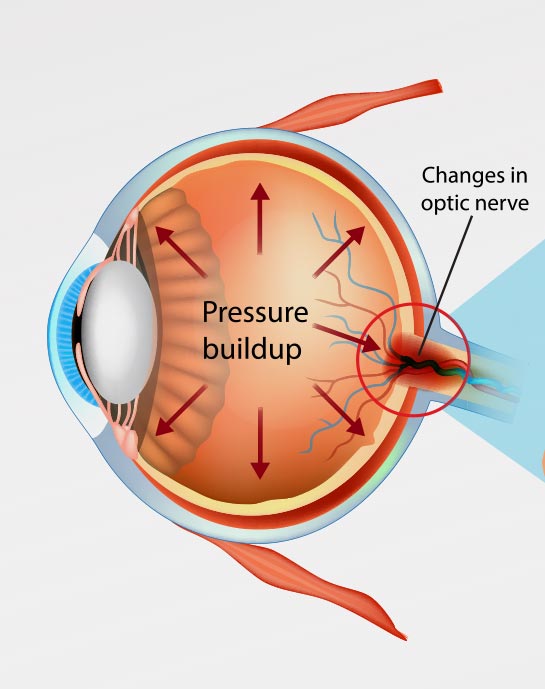
Glaucoma is a group of eye diseases that damage the optic nerve — the bundle of more than a million fibers that carries what you see to your brain. In most cases the damage is driven by pressure inside the eye that is higher than that particular optic nerve can tolerate.

More than two million Americans have glaucoma and nearly half of them do not know it. There is usually no pain and no early change in central vision; the loss begins at the edges and creeps inward, which is how people lose a great deal of sight before they ever notice a problem.

Vision lost to glaucoma can never be regained. That is the whole case for early detection: treatment cannot undo damage, but it is very effective at preventing more of it.

  • Silent by nature. Most glaucoma causes no symptoms until vision is already gone.
  • Progressive. Untreated, it advances from peripheral vision toward the center.
  • Treatable. Drops, laser and micro-stents control pressure and protect the nerve.
Simulation of peripheral vision loss caused by glaucoma
Symptoms & Risk

Why glaucoma is called the silent thief of sight

Open-angle glaucoma produces no pain, no redness and no early blurring. Peripheral vision narrows so gradually that the brain fills in the gaps. By the time a patient notices, permanent damage has usually been done.

Risk begins to climb after about age 35 and rises with every decade after 60. It is higher still if glaucoma runs in your family, if you are of African American or Hispanic descent, or if you have diabetes, thin corneas, significant nearsightedness, a past eye injury, or a history of long-term steroid use.

One important caveat: many glaucoma cases occur at eye pressures inside the “normal” range. Pressure alone never rules glaucoma out. The optic nerve and visual field have to be examined.

  • Get checked sooner if you have a parent or sibling with glaucoma.
  • Get checked sooner if you have diabetes or have used steroids long term.
  • Get checked now if you have sudden eye pain, halos, nausea or blurred vision.
What to Expect

How Newsom Eye diagnoses and treats glaucoma

A complete glaucoma workup takes one visit. Treatment is then matched to your type of glaucoma, your pressure and how your optic nerve is holding up over time.

1

Complete glaucoma evaluation

Eye pressure testing, corneal thickness measurement, gonioscopy to view the drainage angle, a dilated look at the optic nerve, OCT nerve-fiber imaging and visual field testing.

2

Prescription eye drops

First-line treatment for most patients. Drops either reduce how much fluid the eye makes or help it drain. Used consistently, they control pressure well.

3

SLT laser

Selective laser trabeculoplasty is a painless in-office laser that reopens the eye’s natural drain. It can replace or reduce drops and can be repeated.

4

iStent and MIGS

For patients who also need cataract surgery, a micro-stent placed at the same time lowers pressure through one incision — no second operation and no extra recovery.

5

Filtering surgery

When pressure stays dangerously high, a trabeculectomy or tube shunt creates a new drainage pathway. Performed at our AAAHC-accredited surgery centers.

6

Lifelong monitoring

Glaucoma is managed, not cured. Regular pressure checks, imaging and field testing catch progression while there is still vision to protect.

2 Million+Americans living with glaucoma
~50%Do not know they have it
Age 35When risk starts to climb
0Vision restored after loss — prevention is everything
Patient Stories

Real Newsom Eye patients

Amazing Glaucoma OutcomesAmazing Glaucoma Outcomes
Meet Alejandra: A Vision of SuccessMeet Alejandra: A Vision of Success
Amazing Cataract OutcomesAmazing Cataract Outcomes
Glaucoma FAQs

Frequently asked questions about glaucoma

What is glaucoma?

Glaucoma is a group of eye diseases that damage the optic nerve, the cable that carries images from your eye to your brain. In most cases the damage is caused by pressure inside the eye that is too high for that particular optic nerve. Because it usually starts in the peripheral vision and progresses slowly, glaucoma is often called the “silent thief of sight.”

What are the symptoms of glaucoma?

Most glaucoma has no symptoms at all until vision has already been lost. That is exactly why routine dilated eye exams matter. The exception is acute narrow-angle glaucoma, which causes sudden severe eye pain, headache, nausea, blurred vision and halos around lights — that is an emergency and you should be seen immediately.

Can glaucoma be cured?

There is no cure for glaucoma and vision already lost to it cannot be restored. Glaucoma can, however, be controlled. With early detection and consistent treatment, the large majority of patients keep useful vision for the rest of their lives.

Who is at risk for glaucoma?

Risk rises with age — it begins climbing after about age 35 and increases each decade after 60. Other risk factors include a family history of glaucoma, African American or Hispanic ancestry, diabetes, high eye pressure, thin corneas, nearsightedness, previous eye injury, and long-term steroid use.

Can you have glaucoma if your eye pressure is normal?

Yes. Many glaucoma cases occur at pressures in the “normal” range, a form called normal-tension glaucoma. Pressure alone is never enough to rule glaucoma in or out, which is why we also image the optic nerve and test your visual field.

How is glaucoma diagnosed at Newsom Eye?

A complete glaucoma evaluation includes a pressure check (tonometry), a dilated look at the optic nerve, corneal thickness measurement (pachymetry), OCT nerve-fiber imaging, visual field testing and gonioscopy to examine the drainage angle. Together these tell us whether damage is present and whether it is progressing.

What treatments are available for glaucoma?

Treatment usually starts with prescription eye drops. If drops are not enough or are difficult to tolerate, options include SLT (selective laser trabeculoplasty), laser iridotomy for narrow angles, and minimally invasive glaucoma surgery such as the iStent, which can be placed during cataract surgery. Traditional filtering surgery or a tube shunt is reserved for advanced cases.

What is the iStent?

The iStent is a tiny device — the smallest medical implant known to be placed in the human body — that is inserted during cataract surgery to improve the eye’s natural fluid drainage. For many patients it lowers eye pressure and reduces dependence on glaucoma drops without a separate operation.

How often should I be screened for glaucoma?

Adults with no risk factors should have a dilated eye exam every one to two years, and every year after age 60. If you have a family history of glaucoma, diabetes, or elevated eye pressure, your Newsom Eye doctor will likely recommend annual or more frequent monitoring.

Where does Newsom Eye treat glaucoma?

Glaucoma testing and treatment are available at all five Newsom Eye locations — Sebring, Carrollwood (Tampa), South Tampa, Brooksville and Gainesville — with surgical care performed at our three AAAHC-accredited surgery centers.

Protect the vision you still have

Glaucoma cannot be reversed — but it can almost always be controlled when it is caught early. Schedule a glaucoma evaluation at any of our five Florida locations.